
To support regulatory compliance and safeguard water quality, Civiltec provided professional engineering support for the PFOS treatment system expansion at Covina Valley Water Company’s Baldwin Park Pumping Plant. The project focused on expanding existing wellhead treatment infrastructure while limiting interruption to operations at this active facility.
The project included a detailed review of existing plans and specifications to confirm constructability and clearly define responsibilities between owner-furnished equipment and contractor-provided materials. Civiltec worked closely with Covina Valley Water Company to identify potential gaps, coordinate equipment interfaces, and refine bid documents to support competitive and well-informed contractor proposals.
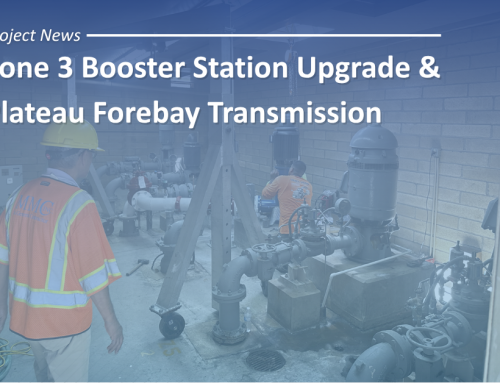
The treatment system expansion included the installation of additional PFOS treatment vessels, associated piping manifolds, valves, flow meters, and instrumentation to match existing site infrastructure. New influent and effluent piping, structural pipe supports, and system connections were designed to integrate seamlessly with the existing treatment process while allowing the facility to remain operational during construction.
Civiltec provided bid-phase support services, including participation in pre-bid job walks and responses to contractor questions. These efforts, led by Principal Engineer David Song, PE, helped contractors understand site constraints, sequencing requirements, and coordination needs associated with working within an active pumping and treatment facility.
During construction, the team supported the project through pre-construction coordination, site visits, review of contractor submittals, and responses to RFIs. The team also participated in system startup and testing to assist with initial operation of the expanded treatment system and address any issues identified during commissioning.
The project strengthens Covina Valley Water Company’s PFOS treatment capabilities and supports long-term water quality objectives by expanding treatment capacity while leveraging and integrating existing infrastructure.