Civiltec Engineering (Civiltec) is proud to share that the Schultz/Pipeline Post-Wildfire Flood Mitigation Systems Project has been recognized as the 2026 Project of the Year by the Arizona Chapter of the American Public Works Association (APWA) in the Disaster or Emergency Construction Repair – More than $75 Million category. The award honors the collaborative effort led by the Coconino County Flood Control District to protect Northern Arizona communities from the devastating and long-lasting impacts of post-wildfire flooding.
The recognition comes after years of planning, coordination, design, and construction following a series of catastrophic wildfires that dramatically altered the watersheds surrounding Flagstaff. The Schultz Fire, followed years later by the Tunnel and Pipeline Fires, burned tens of thousands of acres across the slopes of the San Francisco Peaks, leaving communities vulnerable to severe flooding, erosion, and debris flows during monsoon storms. More than 1,500 homes were placed at increased risk as runoff rates surged well beyond pre-fire conditions.
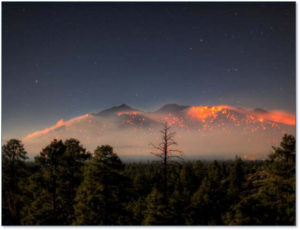
Figure 1: Pipeline Fire burning the slopes of the San Francisco Peaks, June 2022.
In response to this challenge, the Coconino County Flood Control District secured more than $130 million in federal, state, and local funding to support watershed restoration and long-term flood mitigation projects throughout the burn areas. The effort resulted in one of the most comprehensive post-wildfire mitigation programs undertaken in Arizona, with more than $100 million in completed mitigation improvements delivered across nine impacted watersheds.
Civiltec played a key role on the multidisciplinary team, working alongside Coconino County Flood Control District, JE Fuller Hydrology & Geomorphology, Tiffany Construction, and other project partners to help develop and implement lasting solutions to protect residents and infrastructure. Over the course of the program, the team delivered watershed restoration, hydrologic modeling, storm drain improvements, flood control infrastructure, channel stabilization, surveying, construction administration, and community-focused design solutions.
The scale of the work was remarkable. Across nine watershed corridors, the project included more than 290 acres of watershed restoration, over 420 flood control structures, more than 11 miles of channel stabilization and erosion control measures, and over 6 miles of neighborhood flood conveyance infrastructure. Approximately 20,000 linear feet of underground storm drainpipe was installed, including 8,000 feet of 120-inch diameter spiral rib metal pipe capable of conveying flows of up to 1,800 cubic feet per second.
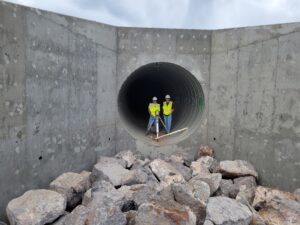
Figure 2: Installation of 120-inch spiral rib metal pipe. The largest diameter manufactured by the supplier’s mobile mill.
The project team also faced a number of significant challenges. Construction schedules were constrained by emergency funding deadlines, harsh winter conditions, and narrow weather windows between snow season and summer monsoons. At the same time, many improvements were constructed on or adjacent to private properties, requiring extensive communication and coordination with residents to address concerns while maintaining project momentum. Through close collaboration and innovative construction approaches, the team successfully completed all mitigation projects by the target completion date ahead of the 2025 monsoon season.
One of the most rewarding moments came shortly after completion, when a major monsoon storm, approximating a 100-year rainfall event, tested newly constructed mitigation systems. The infrastructure performed exactly as intended, safely conveying floodwaters and demonstrating the effectiveness of the team’s long-term approach to community protection.
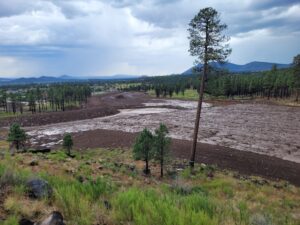
Figure 3: Wupatki fan reconstruction successfully conveying flows during 100-year monsoon event.
Beyond the engineering achievements, the project was built around the needs of the community. Hundreds of residents participated in public meetings, stakeholder outreach efforts, project updates, and guided tours throughout the planning and construction process. The team worked diligently to minimize impacts to neighborhoods, preserve natural resources, protect sensitive environmental areas, and maintain transparent communication with those who would ultimately benefit from the improvements.
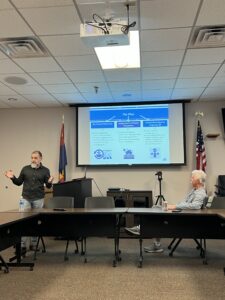
Figure 4: Public presentation held to inform and engage residents prior to construction.
The APWA Project of the Year Award recognizes not only technical excellence but also outstanding construction management, safety, community engagement, environmental stewardship, and innovation. Throughout the project, the team achieved zero lost-time accidents while navigating complex permitting requirements, utility relocations, private easement negotiations, and environmentally sensitive areas. Innovative solutions, such as local pipe manufacturing, accelerated construction methods, and nature-based flood mitigation features, helped improve efficiency while reducing environmental impacts.
“This award reflects the dedication of an exceptional team and our shared commitment to protecting the communities we serve,” said Chris Dusza, PE, CFM, Project Manager. “We are honored to work alongside the Coconino County Flood Control District and our project partners on infrastructure improvements that provide meaningful and lasting benefits to Northern Arizona residents.”
Civiltec is honored to be part of this award-winning effort and congratulates the Coconino County Flood Control District, JE Fuller Hydrology & Geomorphology, Tiffany Construction, and all project stakeholders whose collaboration made this achievement possible. Together, the team has delivered resilient infrastructure that will help safeguard Northern Arizona communities for generations to come.